Case Studies: Addressing Cognitive Problems in Interface Designs
September 2019 - December 2019
Claremont Graduate University (CGU)


Project Overview
As part of my graduate coursework, I was tasked with identifying an applied problem related to cognitive science, devising a solution to the problem that was supported by relevant research, and suggesting a means to quantitatively evaluate the efficacy of the proposed solution.
I focused two problems, related to email UI and iPhone alarm clock UI, respectively:
01
Email Interface
02
iPhone Alarm

Case Study 1
Email Interface
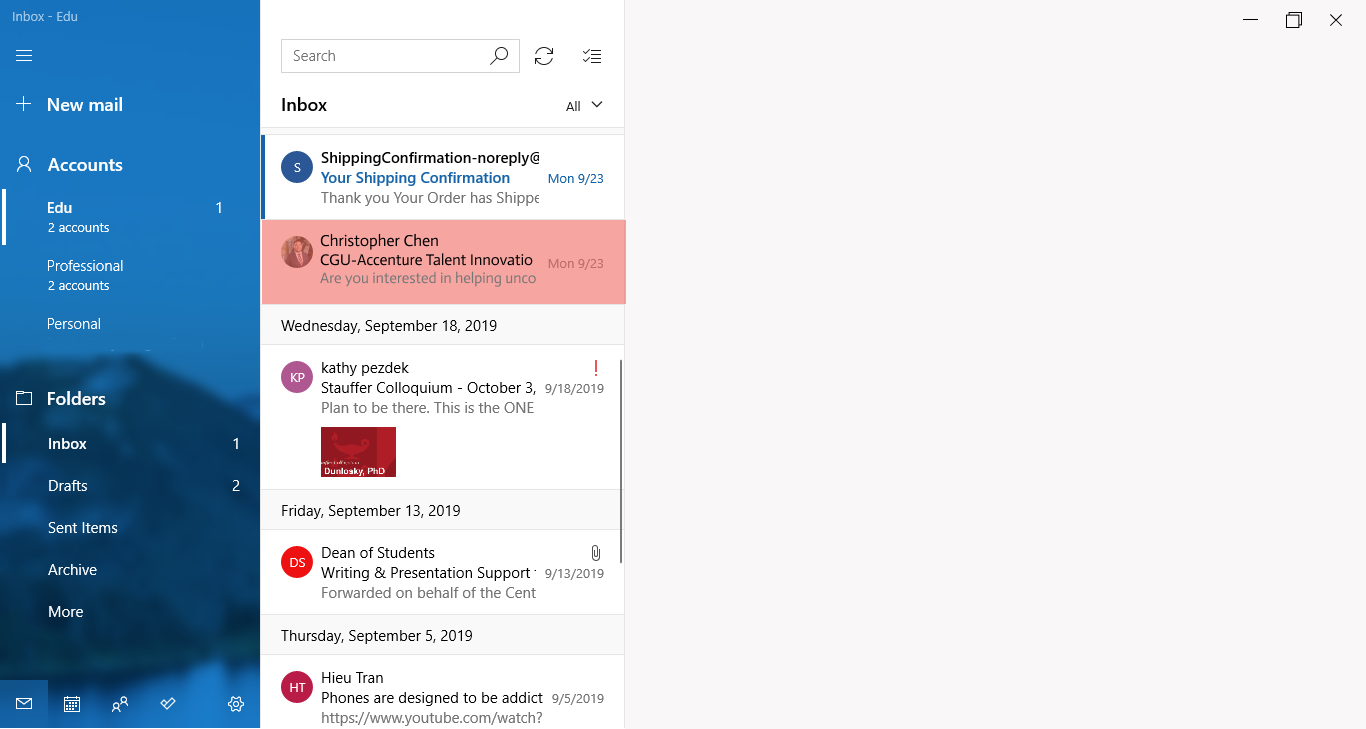
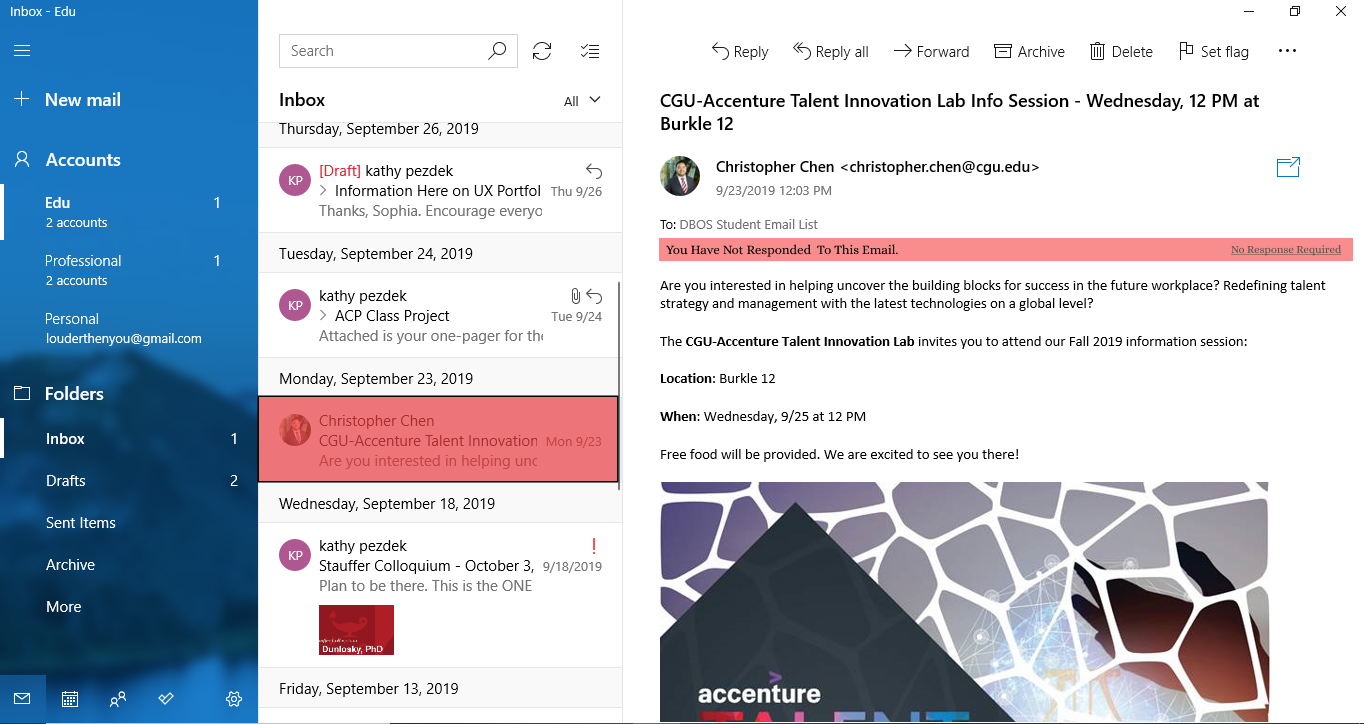
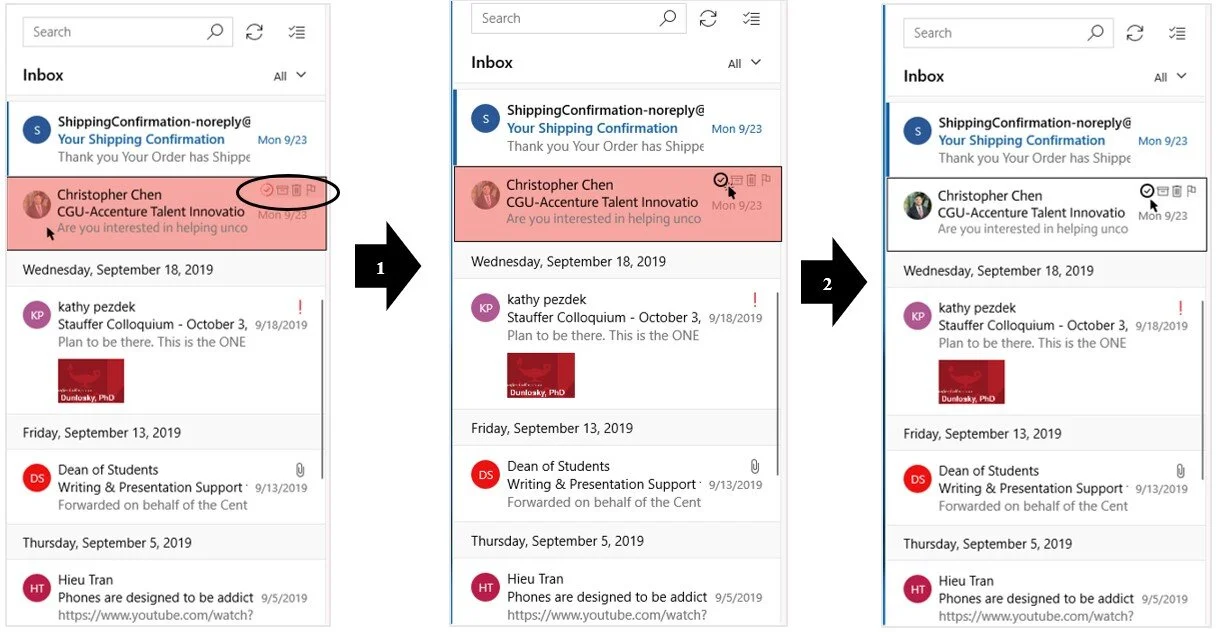
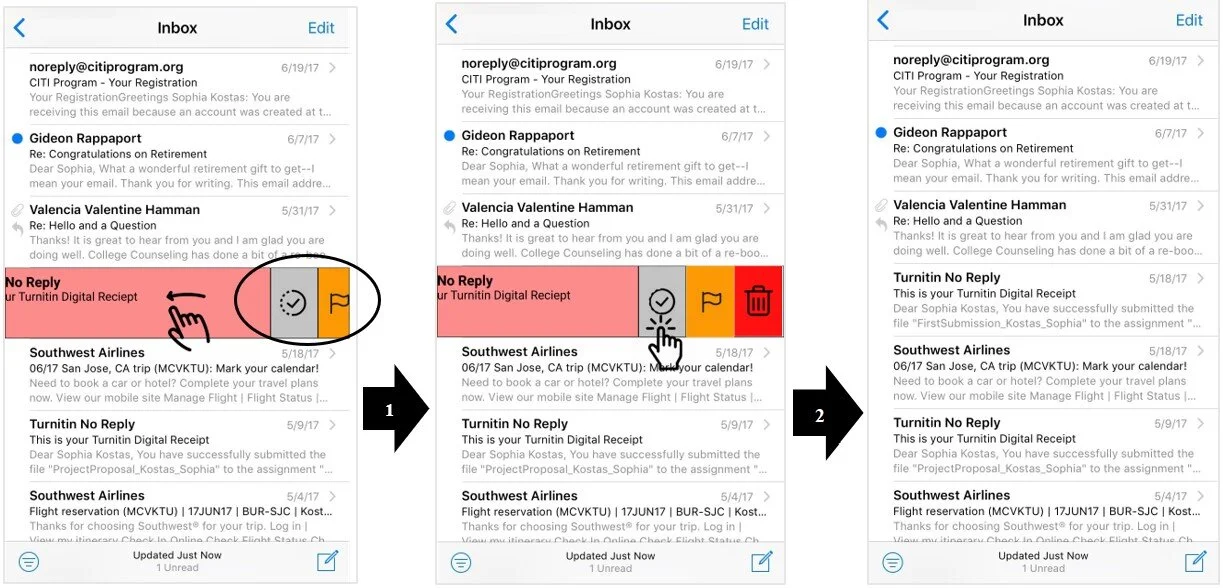
Problem: Email user read emails with the intent to respond but often forget about these emails and thus reply much later than intended.
Solution: The proposed interface change is grounded in prospective memory and perception literature and should faciliate fewer forgotten emails by automatically focusing visual attention on "need-to-reply" emails.
Highlighted Features

Case Study 2
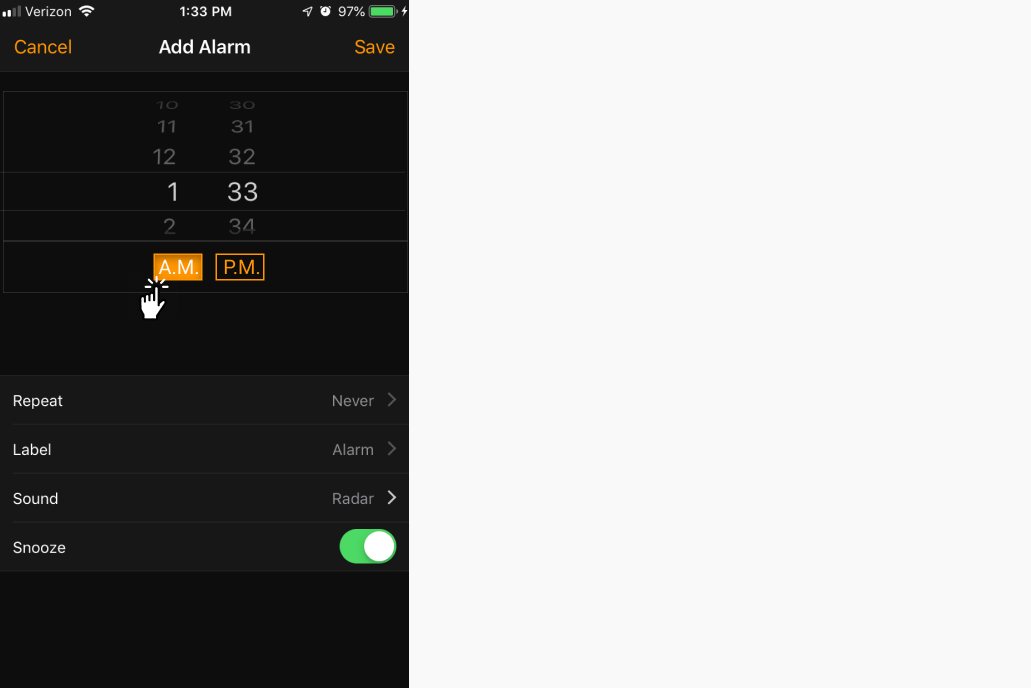
iPhone Alarm Clock
Problem: Because users are primarily focused on setting the numerical time of an alarm, they may set the alarm time and subsequently save the alarm without attending to the A.M./P.M. settings. In many instances, the user only realizes she has mistakenly set her alarm for the wrong time of day after her alarm fails to go off at the indended time.
Solution: The proposed interface change is grounded in spatial inattentional blindness and attention capture literature and should prevent mis-set alarms by drawing automatic visual attention to the A.M./P.M. settings.
Highlighted Features